


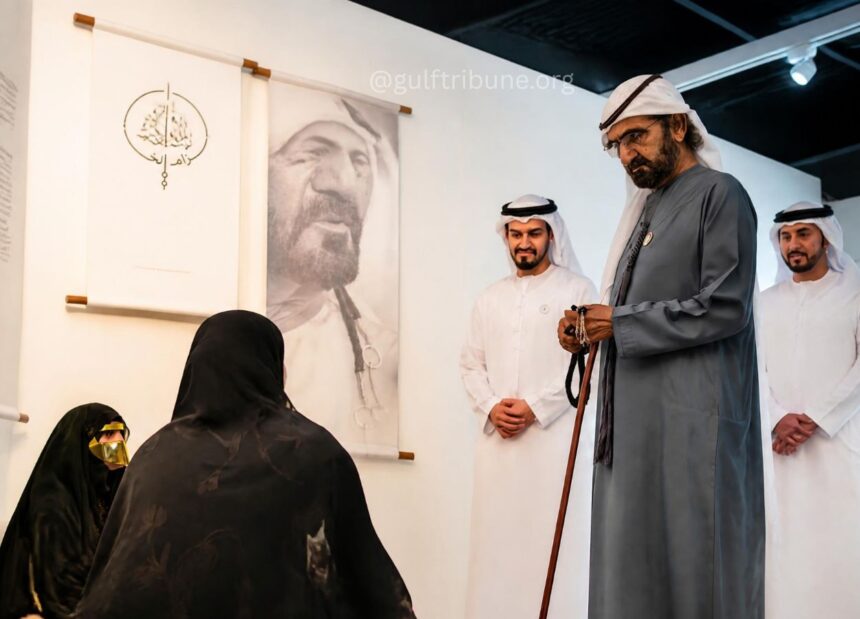
Sheikh Mohammed bin Rashid Al Maktoum, who is the Vice President and Prime Minister of the UAE and Ruler of Dubai, has recently reviewed the research of the country on the history of the development of Al Khuzam. It has become apparent through the study that the object evolved from a practical item into a timeless cultural emblem. Al Khuzam Cultural Evolution
The present research project seeks to investigate the historical significance of the Al Khuzam from three different chronological perspectives, namely, the first period is associated with its practical use as a guidance tool for the camels that the Bedouins used to transport from one location to another.
Over generations, as social structures evolved across the Arabian Peninsula, the craft transitioned from utilitarian equipment into decorative elements incorporated into traditional apparel, eventually cementing its status as an iconic motif in contemporary Emirati visual culture.
By examining classical and vernacular Arabic poetry, the research demonstrates how Al Khuzam was historically woven into regional literature, frequently cited in verses celebrating leadership, resilience, and noble character. Beyond literary analysis, the documentation details the meticulous manual labor required in traditional manufacturing.
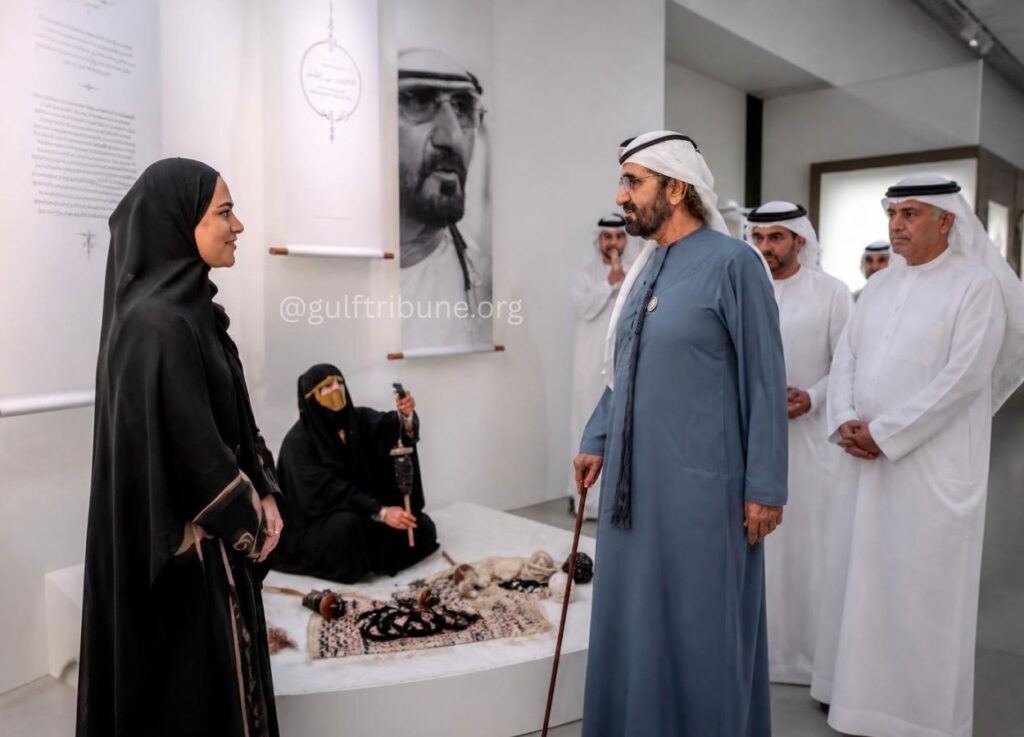
Master artisans carefully source natural sheep wool, spin fine raw threads, and weave high-density cords. These textiles are then combined with intricate knotting techniques, metallic fasteners, and handcrafted silver fittings, transforming raw materials into functional artwork.
The study further highlights ongoing efforts by modern Emirati fashion designers, jewelry creators, and creative entrepreneurs who are actively reinterpreting Al Khuzam motifs within contemporary luxury markets. By integrating these historic patterns into modern consumer goods, the creative sector ensures that traditional aesthetics remain relevant to younger generations.
Sheikh Mohammed bin Rashid examined strategic frameworks included in the project aimed at establishing formal documentation protocols, safeguarding artisan ecosystems, and promoting traditional crafts across international cultural platforms.
Preserving such intangible cultural heritage forms a core pillar of the UAE’s broader strategy to celebrate national identity alongside rapid modernization. The comprehensive research project serves as an authoritative historical archive, ensuring that foundational traditional crafts are rigorously documented and protected for future generations.
Through continuous institutional backing, initiatives documenting heritage artifacts like Al Khuzam reinforce the country’s commitment to sustaining its historical legacy while fostering an innovative, heritage-driven creative economy throughout the Emirates and the wider region. Gulf Tribune