

, Michael Javier (COO & Co-Founder), and Abdul Rashid (CTO & Co- Founder). </p><p>The company’s mission is to make financial wellbeing a standard workplace benefit across the GCC and beyond by providing middle-income workers with simple, responsible, and technology-driven access to earned income and salary-linked financial tools.</p><p>The company was formally registered around the time of Web Summit Qatar 2025, marking the transition of Liabify from concept to execution. Shortly after its incorporation, Liabify was accepted into Qatar’s Digital Incubation Center (DIC), where the founding team began developing the first iterations of its product, embedding regulated financial services directly into payroll and HR management systems.</p><p> </p>%20%20%20%20%20%20%20%20
%20%20%20%20%20%20%20%20
%20%20%20%20%20%20%20%20%20%20%20%20
%20%20%20%20%20%20%20%20%20%20%20%20%20%20%20%20%20%20%20%20%20%20%20%20%20%20%20%20%20%20%20%20%20%20%20%20%20%20%20%20%20%20%20%20%20%20%20%20%20%20%20%20%20%20%20%20%20%20%20%20
%20%20%20%20%20%20%20%20%20%20%20%20%20%20%20%20%20%20%20%20%20%20%20%20%20%20%20%20%20%20%20%20%20%20%20%20%20%20%20%20%20%20%20%20%20%20%20%20<img%20loading= "Liabify: Qatar-born Payroll Fintech Scales Around the GCC")

 has announced the graduation of 10 technology companies from the third cohort of the Scale Now programme.</p><p> </p><p>Simultaneously, the MCIT launched the programme’s fourth cohort with the participation of 12 new companies, reaffirming its commitment to accelerating the growth of promising technology ventures and further strengthening Qatar’s position as a regional hub for innovation and digital entrepreneurship.</p><p> </p><p>The graduating companies have developed innovative solutions across a range of strategic sectors, including industrial technologies, health technologies, media technologies, agricultural technologies, e-commerce, enterprise technologies, and logistics.</p><p> </p><p>The diversity reflects the strength of Qatar’s technology entrepreneurship ecosystem and the programme’s role in supporting companies that develop innovative solutions to address the evolving needs of local and international markets.</p><p> </p><p>The graduating cohort in the Industrial Technologies sector includes Syook, which operates as a no-code Industrial IoT and AI platform enabling real-time asset tracking, safety, and compliance. Alongside it, Digital Petroleum provides patented AI sensor technology designed to enable instant digitalisation of industrial plants.</p><p> </p><p>Within HealthTech, Medica serves as a healthcare fintech platform automating insurance and revenue cycle management for hospitals and clinics, while Eshfaa functions as a digital healthcare and medical tourism platform coordinating care for local and international patients.</p><p> </p><p>In MediaTech & Publishing, Aligator offers an AI media intelligence platform that monitors and improves organisational reputation in Arabic and English.</p><p> </p><p>Complementing this, Rawi is an Arabic audio platform producing audiobooks, educational programmes, documentaries, edutainment, and podcasts.</p><p> </p><p>In Agritech, Growa delivers data-driven farming solutions through IoT, AI, GNSS, and agronomic expertise. Meanwhile, in e-commerce, Genio provides a cashless payment and nutrition-tracking system enabling parents to monitor their children’s spending and food consumption at school.</p><p> </p><p>For Enterprise Tech, Byanat acts as an AI observability platform analysing telecom and data centre infrastructure performance and recommending optimisations.</p><p> </p><p>In Logistics, WareOne operates as an asset-light logistics orchestrator delivering on-demand, tailored supply chain solutions across the value chain.</p><p> </p><p>Across its first three cohorts, the Scale Now programme has delivered tangible results that reflect its impact in supporting the growth of high-potential technology companies. Participating companies have collectively secured investments secured approximately $13.8mn in funding, closed 388 B2B deals, and achieved an average 32% revenue growth.</p><p> </p><p>In addition, entrepreneurs participating in the programme have benefited from 569 hours of dedicated advisory support, while the programme achieved an overall participant satisfaction rate of 89%, underscoring the quality of the experience and value delivered to participating companies.</p><p> </p><p>Faraj Abdulla, director of Digital Economy Department at MCIT, said: “The graduation of the third cohort of the Scale Now programme reflects the tangible outcomes the programme has achieved in supporting high-potential technology companies and enabling them to grow, expand, and access new markets.”</p><p> </p><p>Ali al-Mawlawi, director of Business Development Department at MCIT, said: “This initiative reflects our commitment to empowering startups, fostering innovation, and advancing the Digital Agenda 2030, further reinforcing Qatar’s position as a leading hub for the digital economy.”</p><p> </p><p>The third cohort concluded with WareOne successfully expanding its operations into Saudi Arabia. Sheikh Khalifa al-Thani, founder and CEO of WareOne, said: “When we joined the Scale Now programme, our goal was to better understand the local market. However, the programme delivered far more than we expected.”</p><p> </p><p>Alongside the graduation of the third cohort, the MCIT also announced the launch of the fourth cohort of the Scale Now programme, welcoming 12 new technology companies.</p><p> </p>%20%20%20%20<p>Related%20Story</p>
%20%20%20%20
%20%20%20%20%20%20%20%20%20%20%20%20%20%20%20%20
%20%20%20%20%20%20%20%20%20%20%20
%20%20%20%20%20%20%20%20%20%20%20%20
%20%20%20%20%20%20%20%20%20%20%20%20%20%20%20%20%20%20%20%20%20%20%20%20%20%20%20%20%20%20%20%20%20%20%20%20%20%20%20%20%20%20%20%20%20%20%20%20%20%20%20%20%20%20%20%20%20%20%20%20
%20%20%20%20%20%20%20%20%20%20%20%20%20%20%20%20%20%20%20%20%20%20%20%20%20%20%20%20%20%20%20%20%20%20%20%20%20%20%20%20%20%20%20%20%20%20%20%20<img%20loading= "MCIT celebrates graduation of 10 firms of Scale Now programme")
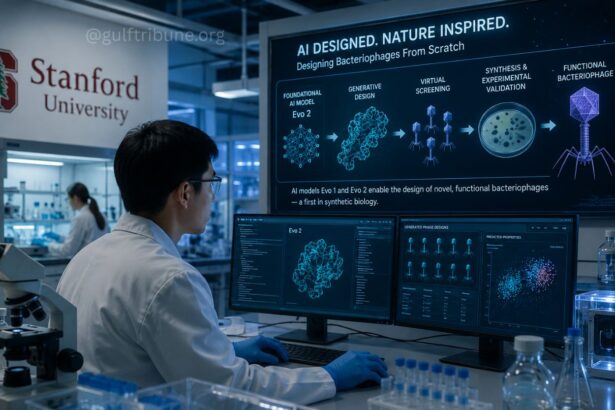


Korea unveils future technology drivers, targets moon landing by 2030
People look at views across the city from…

Gulf-Asia technology corridor paves the way to shared success
SHI YU/CHINA DAILY For years, we have been…

Hayya wins Silver Stevie Award
Qatar Tourism (QT) has announced that the Hayya platform has been awarded the silver award in the “Technical Innovation of the Year in Government Technology” category at the 2026 Stevie Awards for Technology Excellence, recognising its continued evolution as a digital platform driving artificial intelligence (AI)-enabled, automated and intelligently integrated government services.Since 2024, Hayya has advanced from being a visitor entry platform into a connected national digital ecosystem supporting Qatar's tourism, government services and major international events.Its e-visa processing ecosystem now unifies identity verification, approvals, payments, notifications and access services within a single digital workflow, the QT said in a press statement Monday.The platform's innovation is reflected in its adoption of advanced technologies, including OCR (optical character recognition)-powered document extraction, passport parsing, ICAO (International Civil Aviation Organisation) photo-compliance checks, and automated validation workflows, which have improved efficiency, reduced manual intervention and enhanced processing accuracy.Hayya processed nearly 850,000 applications in 2025, with an average of one e-visa processed every 35 seconds, while application correction rates were reduced to 5% over the same period."This award is a testament to Hayya's unwavering commitment to enhancing our services through innovation, technology, and user-centric solutions that deliver a seamless, hassle-free travel experience from visa application through to arrival,” said Hayya director Saeed al-Kuwari.“As we continue to evolve, we remain focused on leveraging digital transformation to deliver frictionless experiences and support Qatar's vision for a smarter, more connected future,” he said.Operated by Qatar Tourism, Hayya serves as Qatar's official e-visa platform and central digital gateway, streamlining access to the country through integrated visa processing and event services within a single, user-friendly interface.Stevie Awards are conferred in nine programmes: “The American Business Awards”, “The Asia-Pacific Stevie Awards”, “The German Stevie Awards”, “The Middle East & North Africa Stevie Awards”, “The International Business Awards”, “The Stevie Awards for Great Employers”, “The Stevie Awards for Sales & Customer Service”, “The Stevie Awards for Women in Business”, and “The Stevie Awards for Technology Excellence”.Stevie Awards competitions receive more than 12,000 entries each year from organisations in more than 70 nations.Honouring organisations of all types and sizes and the people behind them, the Stevies recognise outstanding performances in the workplace worldwide. Related Story
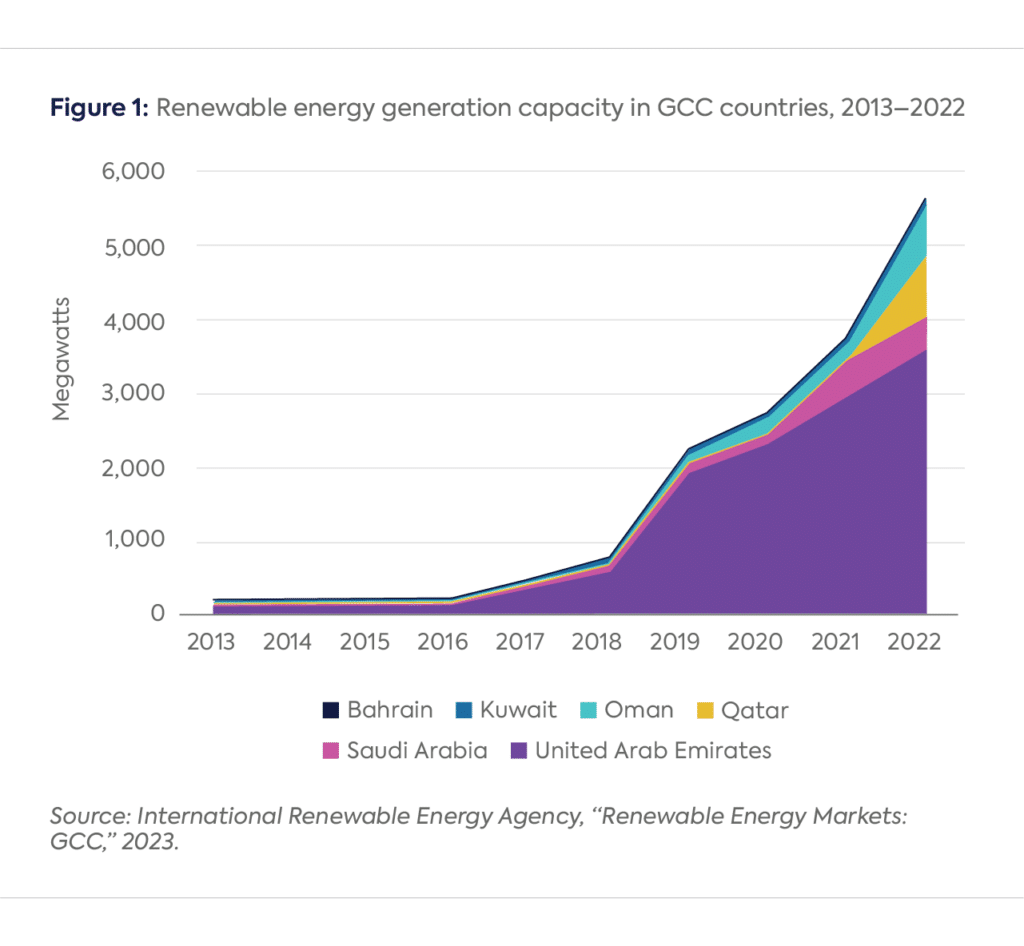
How Carbon Capture Technology Could Maintain Gulf States’ Oil Legacy – Center on Global Energy Policy at Columbia University SIPA | CGEP %
This Energy Explained post represents the research and…
Biomimicry accelerating sustainable technology by learning from nature
Many living organisms on Earth inhabit an environment that is, in one way or another, trying to work against it: scorching heat, freezing cold, scarce water, relentless predators. Over vast stretches of time, life has been engineered to respond not with brute force but with elegant design in the shape of structures, surfaces, and processes that solve problems with remarkable efficiency and minimal waste. Biomimicry is the discipline that studies these natural strategies and asks a deceptively simple question: what if human technology did the same?Popularised by the biologist Janine Benyus in her 1997 book Biomimicry: Innovation Inspired by Nature, the term describes an approach to innovation that seeks sustainable solutions by studying nature’s models, structures, and processes. It is not just about copying a shape, but understanding the underlying principle that makes a biological strategy work and translating it into human design. Biomimicry sits at the intersection of biology, engineering, materials science, and architecture, and is gaining serious momentum as a research methodology for a world urgently seeking sustainable solutions.How it worksBiomimicry operates on three distinct levels. The first is form: borrowing a shape or structure from nature to improve a product’s performance. A classic example is Japan’s Shinkansen bullet train which was redesigned with a nose resembling a kingfisher’s beak, cutting sonic booms and improving energy efficiency. The second is process: learning how organisms manufacture or assemble objects, often at ambient temperature and without toxic by-products. The third, and deepest, is ecosystem: designing whole systems in which waste from one process becomes input for another, mirroring the closed-loop logic by which natural ecosystems sustain themselves indefinitely.What distinguishes biomimicry from earlier forms of bio-inspiration is its explicit sustainability ethic. Biomimicry practitioners do not simply borrow a clever mechanism; they ask whether the resulting technology operates within the planet’s ecological limits. Nature runs on sunlight, uses only what it needs, and recycles everything. These are precisely the principles the circular economy seeks to embed within modern society. In this sense, biomimicry is not just an innovation tool but a design philosophy aligned with the long-term health of the planet.From laboratory to real worldBiomimicry is already delivering tangible results across diverse fields. Researchers from the National Institute of Standards and Technology and Massachusetts Institute of Technology (MIT) have observed that dogs consistently outperform conventional explosive detectors at airports. In response, they developed a 3D-printed replica of a dog’s nose which boosted the sensitivity of a commercial explosive detector sixteen-fold.Inspired by camels’ pairing of insulating fur with an evaporative skin, MIT engineers have also built a power-free two-layer hydrogel-aerogel cooler that maintains objects more than 7°C below ambient for over eight days — five times longer than hydrogel alone. The same animal’s nasal turbinates act as passive counter-current heat and water exchangers, recovering up to 60% of the moisture in its exhaled breath, a geometry now being adapted for heating, ventilation, and air conditioning, dehumidification, and atmospheric water harvesting.In architecture, ORNILUX bird-protection glass uses a UV-reflective coating inspired by spiders that weave UV-reflective silk into their webs. The glass becomes visible to birds yet remains virtually transparent to human eyes, reducing collisions with building glass by up to ninety percent. More recent developments include Xpeng’s iron humanoid robot featuring a biomimetic spine, bionic muscles, and flexible synthetic skin that enables human-like movement far beyond rigid mechanical frames. Mass production is planned for 2026.Nature-conscious design in QatarCloser to home, Qatar has also embraced nature-conscious design at an ambitious scale. Inspired by the gypsum crystal better known as the desert rose, the National Museum of Qatar comprises 539 interlocking disc elements that create shaded courtyards mediating between the building and the country’s intense climate. Msheireb, the world’s first sustainable downtown regeneration project, draws on traditional Gulf architecture: streets oriented to capture sea breezes, thicker walls for thermal mass, and building clusters that create natural ventilation corridors, cutting energy consumption by 30%.These achievements are significant. Yet there remains a clear opportunity to go deeper to invest in dedicated local biomimicry research that studies how the organisms and ecosystems of the Arabian Peninsula have adapted to extreme heat, coastal humidity, and salinity, and to translate those biological insights into technologies purpose-built for this region.At the Qatar Environment and Energy Research Institute (QEERI), part of Hamad Bin Khalifa University, this work is underway. One line of research draws on the micro-textured skin of sharks whose dermal denticles naturally resist biofouling to develop coatings that improve the performance of desalination membranes. This approach is currently being advanced through QEERI’s participation in the XPRIZE Water Scarcity competition, a global initiative focused on developing relevant innovative and scalable solutions. Another initiative investigates region-specific surface modifications to combat soiling on solar panels. Qatar’s coastal desert, with its combination of high humidity and airborne salts, produces a soiling profile distinct from that of inland arid zones. Nature-inspired surface engineering must account for this specificity to be effective.A framework for the futureBiomimicry is not a silver bullet for translating a biological principle into scalable technology. As a research framework, it nevertheless offers something that purely computational approaches sometimes lack: a starting point, already proven under nature’s most demanding conditions. And new tools are making the framework more practical. Nano-fabrication can now replicate biological structures with increasing fidelity. Large Language Models accelerate the screening of biological databases for engineering-relevant analogues. At QEERI, a platform called ThinQa (thin.qa) generates three-dimensional structures from mathematical equations — many elegantly found in nature — ready for modification and direct 3D printing, reducing the journey from concept to evaluable prototype from months to hours.For societies pursuing ambitious sustainability targets, biomimicry offers a powerful reframing of the innovation challenge. Instead of only asking “what can we invent?” it invites us to consider “what has already been perfected in the natural world, and what can it teach us?” The answers are not exotic or distant. They are in the texture of a shark’s skin, the aerodynamics of a camel’s breath, and the crystalline geometry of a desert rose. Our task and our opportunity is to learn to read them. The writer is a Scientist within the Materials Unit at Hamad Bin Khalifa University’s (HBKU) Qatar Environment and Energy Research Institute (QEERI).(This piece has been submitted by HBKU’s Communications Directorate on behalf of its author. The thoughts and views expressed are the author’s own and do not necessarily reflect an official University stance). Related Story

Strategic Technology in the Middle East: Gulf States’ Place in the AI Race | ISPI
Although artificial intelligence (AI) is still in its…

Kuwait’s ‘Ubuy’ expands to 180 countries, showcasing Gulf’s global e-commerce ambitions – Times Kuwait
As cross-border online shopping continues to gain momentum…

Silicon Statecraft: How U.S.-Gulf AI Deals Project Power
The great-power contest is not unfolding on battlefields…
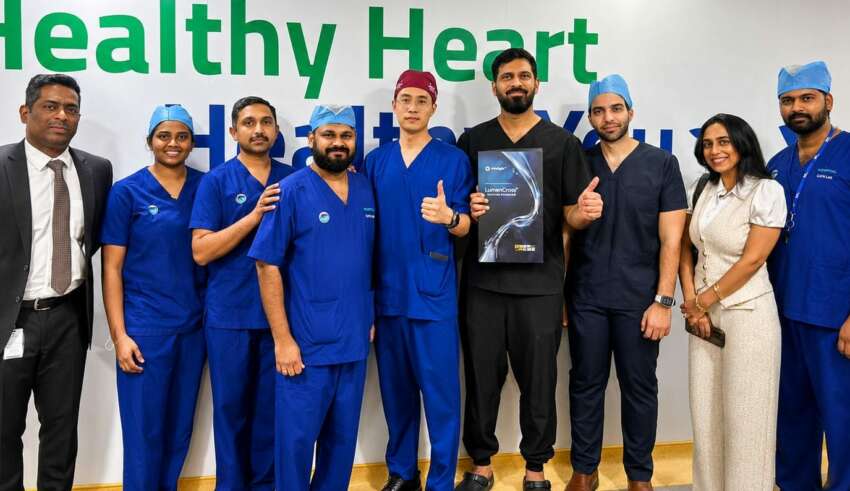
Aster Health center Mankhool First in Gulf to Deploy Complicated Center Imaging Generation – Biz As of late
In contrast to standard angiography, which essentially presentations…
