

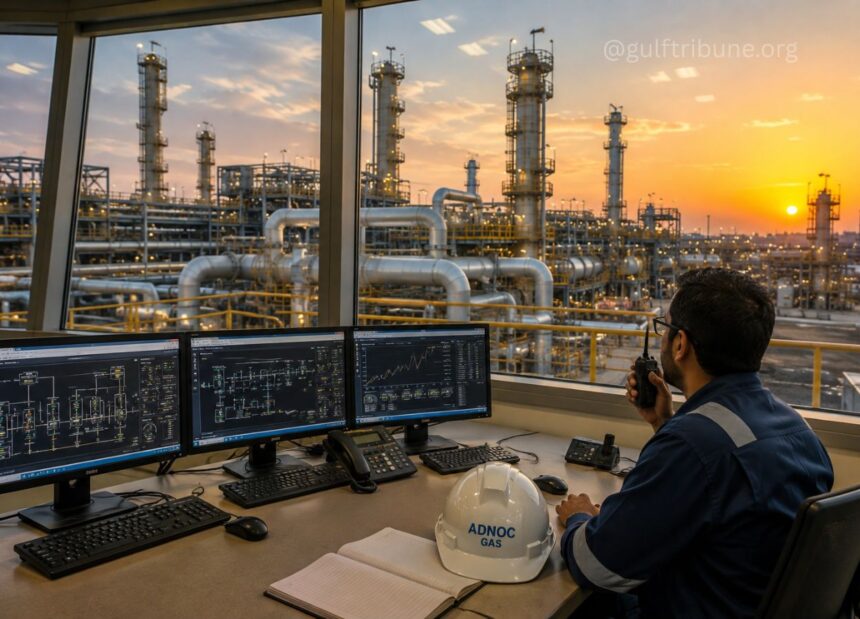
The amount of gas supplied from the ADNOC Gas’ Habshan station is now up to 85%, thus making the plant progress well ahead of schedule in its recovery at the year’s close. ADNOC Gas said that the repair work at the plant is going faster than they thought it would. This is because of what happened at the station in April.
The company first thought they would have the plant working again by December 2026. It would be working at 80% capacity. Before the incident the plant was working at about 60% capacity.
Now ADNOC Gas has finished checking the damaged areas, and the repairs are going as planned at the ADNOC Gas plant. The repair work at the ADNOC Gas plant is on track, according to the company ADNOC Gas.
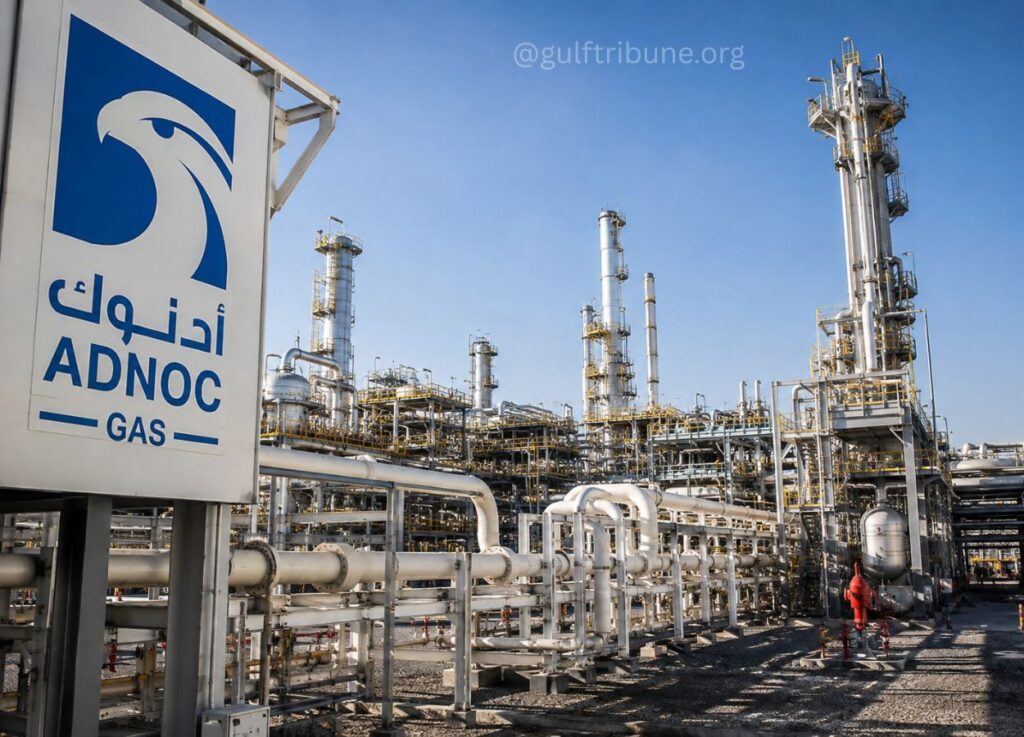
This progress represents a significant milestone in the rehabilitation process of the Habshan site, one of ADNOC Gas’ major gas processing plants. The latest recovery comes as ADNOC Gas reported net income of $665 million for the second quarter of 2026, exceeding the upper end of its earlier guidance range of $400 million to $600 million.
The company is also moving ahead with a major investment programme aimed at increasing gas processing, production and export capacity. ADNOC Gas expects to invest about $28 billion between 2026 and 2030, as it targets 60 per cent growth in EBITDA by 2030 compared with its 2023 baseline.
Four major projects — Ruwais LNG, Maximising Ethane Recovery and Monetisation, Rich Gas Development and Estidama — are expected to generate $13.4 billion in In-Country Value. MERAM is scheduled for completion in 2027, while Ruwais LNG and Estidama are progressing as planned.
ADNOC Gas has also awarded $8.2 billion in engineering, procurement and construction contracts for the second and third phases of its Rich Gas Development project. Phase 2 will add a natural gas processing train at Habshan, while Phase 3 will introduce a natural gas liquids fractionation train at Ruwais.
The latest awards bring total investment in the Rich Gas Development project to $13.2 billion, including $5 billion committed during its first phase in June 2025.