

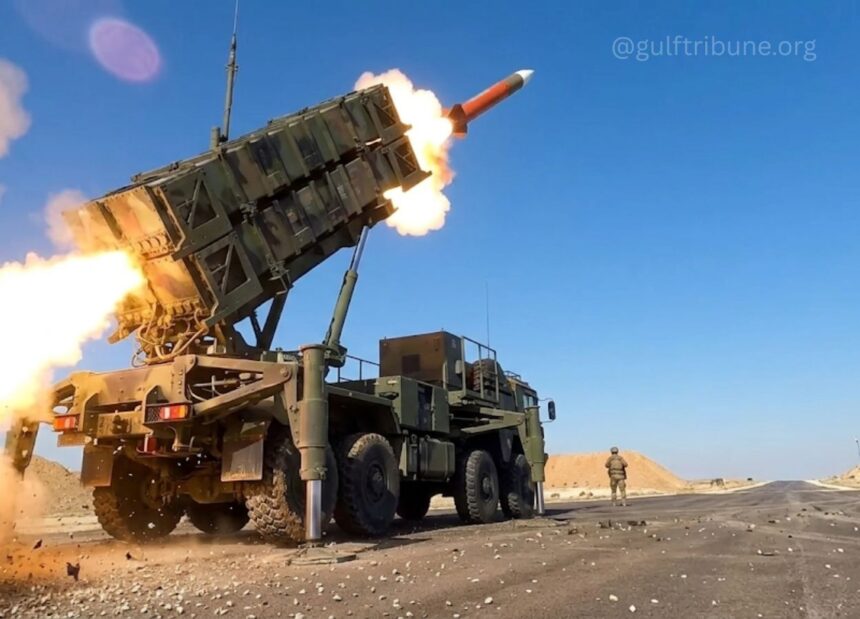
The Kuwait Armed Forces effectively managed to intercept a number of incoming missiles and hostile UAVs, according to the military officials’ statements in the official release from the Kuwait News Agency (KUNA).
According to the General Staff of the Kuwaiti Army, the air defence forces of the country were mobilised immediately after the detection of the incoming aerial threat targeting strategic regions. The defence officials informed the citizens and residents that the reported explosions in several regions occurred due to the destruction of the incoming threats in the air and not because of the impact on the ground.
Civil protection services briefly triggered warning sirens near key urban hubs as defensive interceptors engaged hostile projectiles in outer airspace layer defences.

The defensive operational engagement comes amid heightened readiness across the Arabian Gulf, where sovereign militaries remain on maximum alert against hostile cross-border strikes.
Regional defence postures across Gulf Cooperation Council (GCC) member nations have tightened significantly following persistent long-range drone incursions and ballistic missile deployments threatening energy facilities, urban infrastructure, and critical maritime shipping lanes. Strategic security coordination among allied defence networks has intensified to preserve regional airspace stability.
Kuwaiti military spokespersons urged the public to exercise maximum composure, strictly follow safety directives issued by civil defence authorities, and refrain from circulating unverified videos or speculative claims across social media networks during operational actions.
Command centres confirmed that advanced multi-layered radar tracking systems continue active monitoring to guarantee complete territorial integrity against follow-up aerial threats.
Emergency services, specialised response groups, and municipal civil support units throughout all governorates maintain complete readiness under direct coordination with central defence command.
Military leadership emphasised that sovereign airspace monitoring will proceed without interruption, while defence analysts conduct ongoing risk assessments alongside regional GCC security allies to ensure public safety remains thoroughly protected. Gulf Tribune