


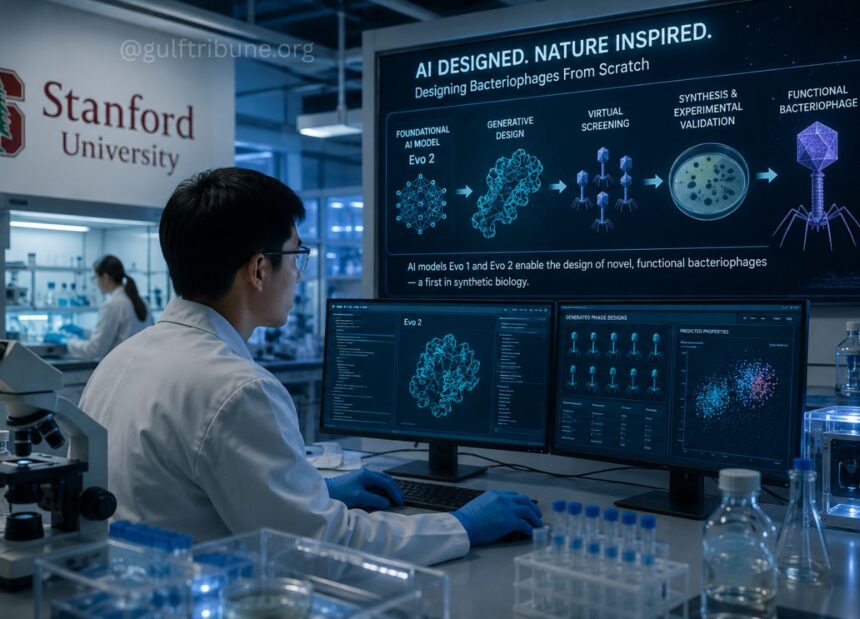
For the first time in history, artificial intelligence technology has been utilized to produce man-made viruses, which were non-existent until now in the natural world, in an advance in the field of synthetic biology, which can pave the way for advancements in medicine while fueling the discussion about biosecurity measures.
The research was conducted by a group of scientists from Stanford University, who created 16 novel bacteriophages, viruses that infect bacteria. This research is detailed in a study published in the journal Science and demonstrates that AI can produce functional viral genomes that can infect drug-resistant Escherichia coli (E. coli) bacteria.

Researchers trained genome-based AI models, known as Evo 1 and Evo 2, on millions of bacteriophage sequences before generating thousands of synthetic viral designs. Laboratory testing confirmed that 16 of those AI-created viruses successfully infected bacteria, providing evidence that artificial intelligence can help design biological systems rather than merely analyze existing ones.
Scientists believe the technology could expand the availability of bacteriophages for phage therapy, an emerging treatment that targets harmful bacteria without relying on conventional antibiotics. Such therapies are increasingly viewed as a potential response to the growing global challenge of antimicrobial resistance.
At the same time, experts cautioned that the achievement highlights significant governance and security challenges. Biosecurity specialists warned that while the current research focused on viruses that infect bacteria rather than humans, advances in AI-driven genome design could eventually be misused if applied to dangerous pathogens. They argued that oversight should extend beyond AI systems to include stronger controls on DNA synthesis, laboratory biosafety standards and screening mechanisms for synthetic genetic material.
The researchers emphasized that designing complex viruses capable of infecting humans remains far beyond current capabilities. Nevertheless, they said the study underscores the need for updated regulatory frameworks as artificial intelligence becomes increasingly integrated into biological research.