


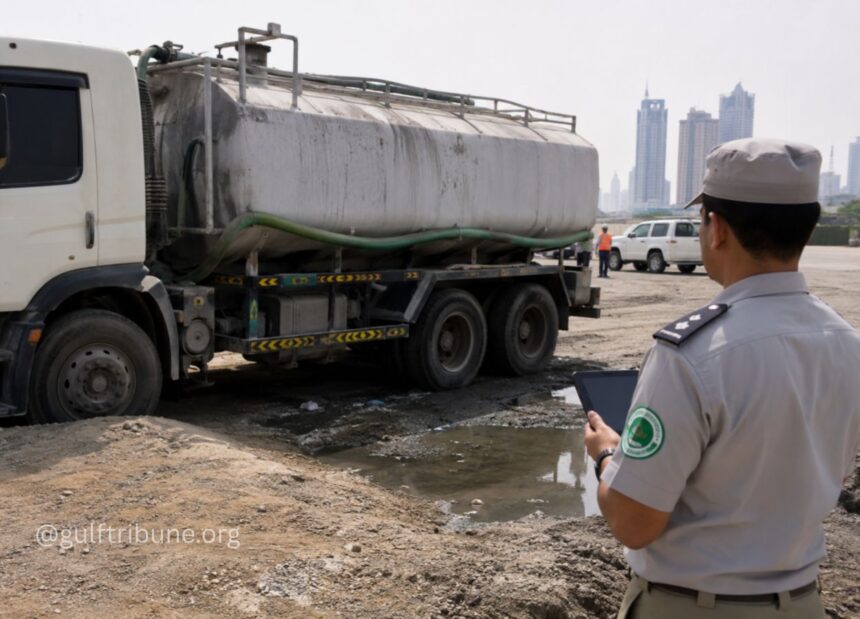
Dubai Municipality has started an action plan to deal with commercial tanker drivers who pour wastewater into places that are not allowed across the city. Local officials said they have taken away big vehicles that were found dumping dirty water outside the right areas. This shows that they will not allow any mistakes.
This effort is part of a plan by the local leaders to keep people healthy, make the city clean and protect nature. Official videos shared by the enforcement teams show some of the tankers that did not follow the rules being taken away and moved to another place.
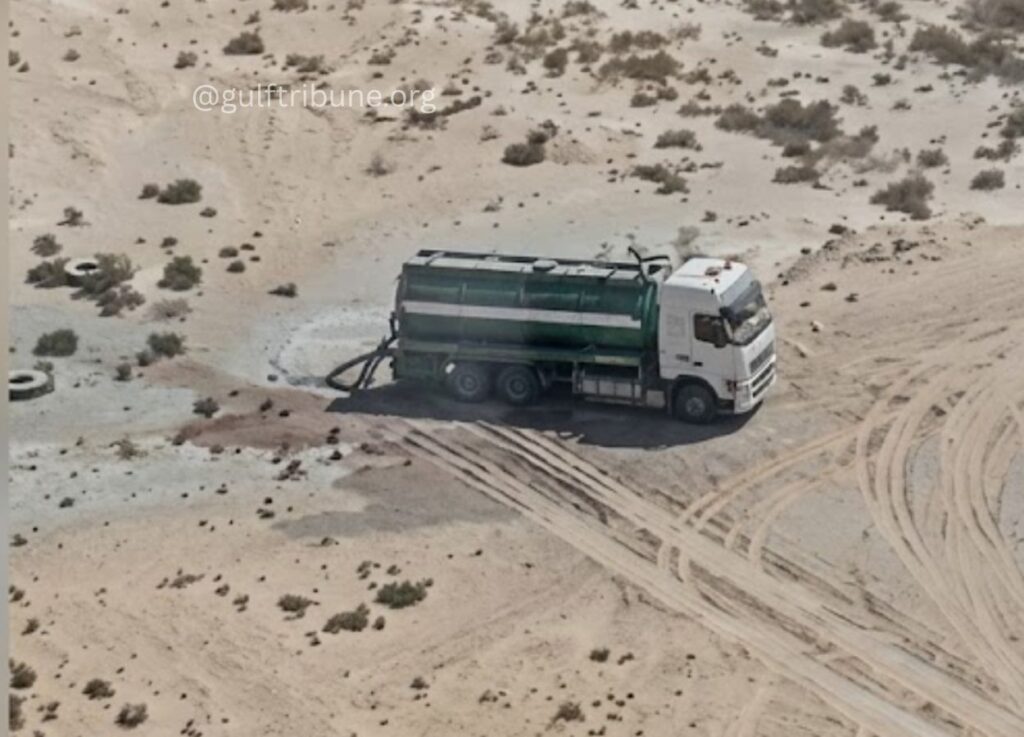
According to Dubai Resolution No. (14) of 2015, which controls hygiene and waste rules in the city putting wastewater in places that are not meant for it is a serious mistake. Transport operators found violating these provisions face immediate vehicle confiscation alongside a mandatory administrative penalty of AED 100,000 per occurrence.
Municipal officials highlighted that illegal waste disposal creates significant public health hazards and causes severe long-term damage to ground soil and surrounding environments. Authorities stated that while commercial activities must proceed efficiently, operators cannot bypass regulatory protocols or cut operational costs at the expense of environmental safety.
The legal framework establishes strict financial consequences across various categories of waste mismanagement. In addition to wastewater violations, building owners face AED 10,000 fines for septic system leakages, while ready-mix concrete operators face AED 50,000 penalties for liquid spills on public roads. Discharging commercial oils into municipal drainage systems or public roads carries an AED 3,000 penalty.
Emphasising that monitoring drives will continue indefinitely across industrial, suburban, and coastal sectors, municipal representatives reiterated their commitment to upholding global infrastructure standards. Authorities called on logistics firms and private transport contractors to utilise approved discharge sites exclusively, warning that persistent offenders face escalated legal measures and potential operational suspensions.


