


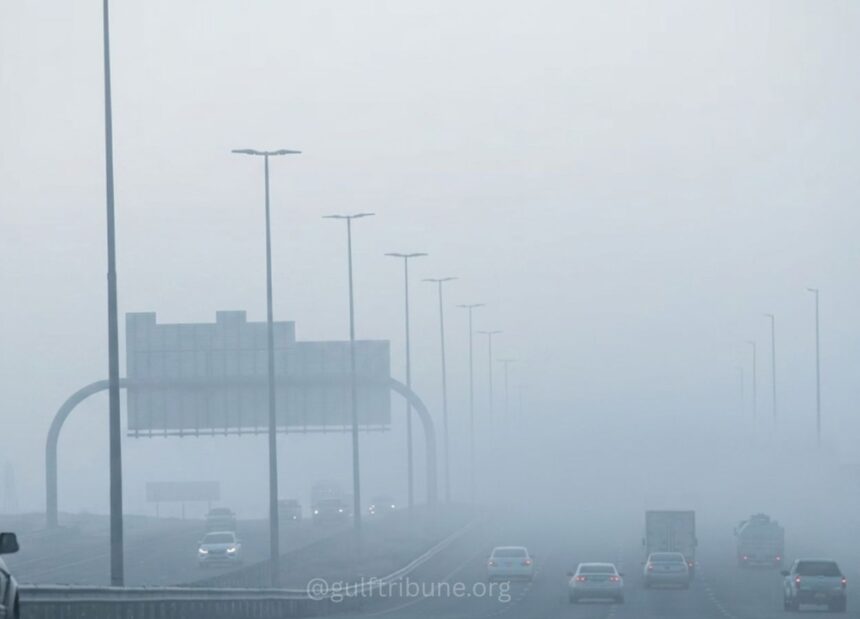
In the early morning, there is so much dense mist and smoke that it has spread to the coastal and inland regions of the UAE, driven by a sharp rise in overnight relative humidity as the nation transitions away from peak summer heat.
According to the National Centre of Meteorology (NCM), weather warnings had been issued to motorists in regard to poor horizontal visibility in Dubai, Abu Dhabi, and the neighbouring interior areas. The relative humidity, as per the weather forecast, rose to 90 per cent during nighttime, thus creating an ideal condition for condensation
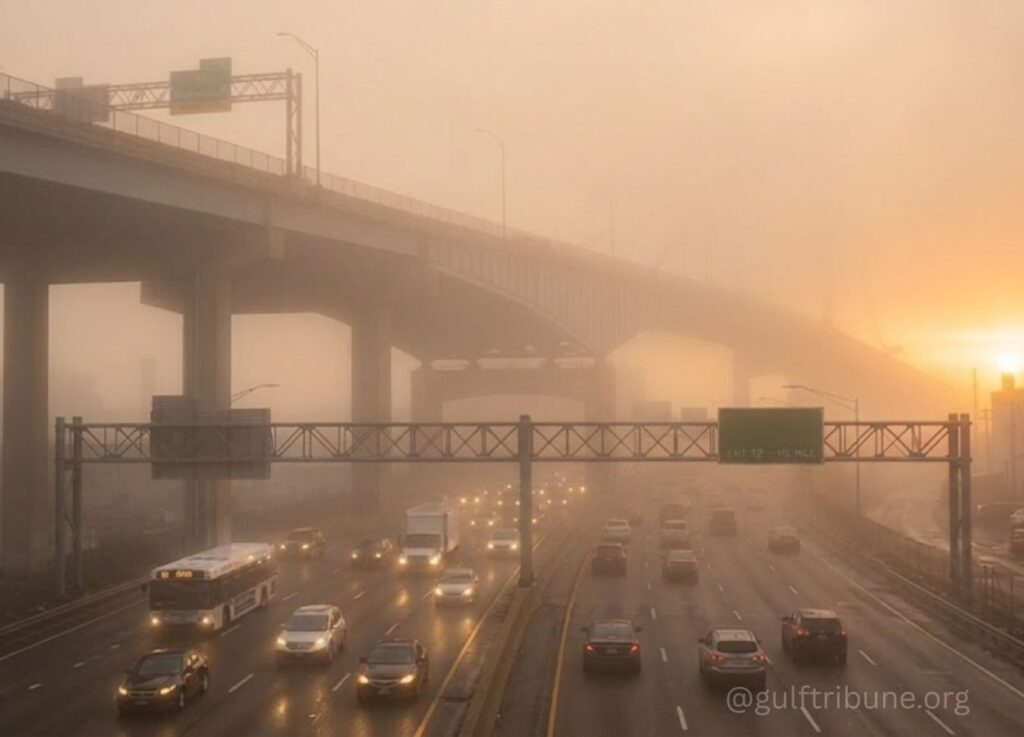
The seasonal resurgence of morning mist coincides with the arrival of meteorological autumn and the ongoing Suhail season, a traditional calendar period across the Arabian Peninsula marked by the pre-dawn appearance of the star Canopus, which signals the gradual retreat of extreme summer temperatures and elevated atmospheric moisture.
The core scientific mechanism powering the present weather pattern relies on a meteorological phenomenon known as radiation fog, which accounts for approximately 95 per cent of all mist events documented in the country. During late afternoon hours, warm, moisture-laden sea breezes move inland from the Arabian Gulf. Following sunset, calm surface winds averaging around five knots allow the open desert floor to rapidly shed heat, causing ambient air temperatures near the ground to drop quickly until they meet the elevated dew point. Microscopic sand and airborne dust particles suspended in the lower atmosphere serve as condensation nuclei, enabling water vapour to coalesce into dense fog banks beneath shallow thermal inversion layers.
Astronomy experts and weather researchers note that high overnight humidity levels remain typical for early September as warm coastal waters continue evaporating at high rates. Light winds help fog formations settle heavily across major transportation corridors before sunrise, while convective clouds building over eastern mountainous areas frequently trigger localised afternoon rain showers before morning mist reforms overnight.
Traffic authorities and emergency management agencies have urged motorists to exercise maximum caution on highways, maintain safe braking distances, avoid using hazard lights while driving, and rely strictly on low-beam fog lamps during early morning travel windows. Weathermen anticipate that while daytime temperatures will continue a steady downward trend toward autumn, high overnight humidity will sustain recurring morning fog risks across coastal and internal zones over the coming weeks. Gulf Tribune