



The Queen of Jordan, AI-Abdullah, is celebrating her 56th birthday on August 31 with her family and the newborn twin granddaughters that expanded her household to four grandchildren.
This year marks an occasion reflecting on the parallel paths taken by the Hashemite Queen, which combine international advocacy of humanitarian reforms, education and youth development with a growing local legacy. The Royal Hashemite Court and Crown Prince Al Hussein bin Abdullah II have sent their warm greetings, appreciating her contribution to society on all levels of involvement.
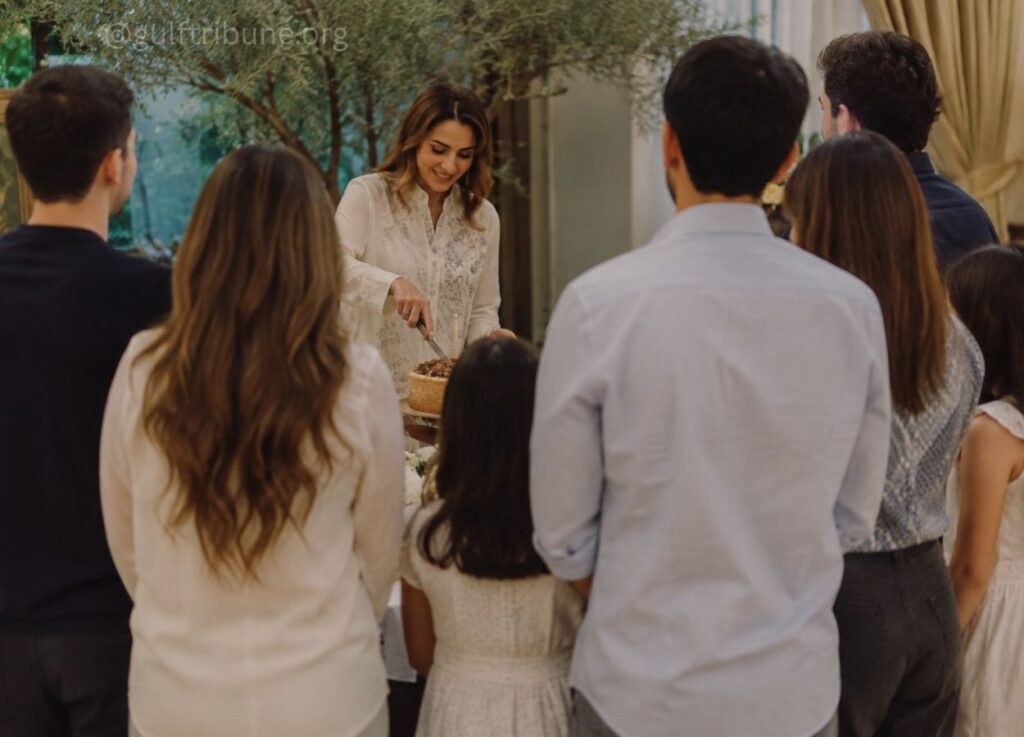
The family celebration follows in the wake of the arrival of Princess Iman’s twins, Talia and Rania, on August 17. The newborns join Princess Iman—daughter of Crown Prince Al Hussein and Princess Rajwa—along with Amina, Princess Iman’s eldest daughter. Queen Rania commemorated the gathering by publishing an informal family portrait online, emphasising her personal role as a mother of four children—Crown Prince Al Hussein, Princess Iman, Princess Salma, and Prince Hashem—and grandmother to four young girls.
Beyond family developments, Queen Rania’s public profile continues to centre on institutional development, cultural preservation, and international dialogue. Since assuming her royal title in 1999 alongside King Abdullah II, she has spearheaded structural social programmes across Jordan aimed at elevating public health, civic leadership, and educational standards. Key initiatives include the Madrasati (“My School”) platform launched in 2008 to rehabilitate public school infrastructure, alongside broader programs advancing women’s economic inclusion, local entrepreneurship, and digital skills development for young Arabs.
On the international stage, Queen Rania has increasingly addressed pressing regional security concerns, sustainable development goals, and acute humanitarian crises. Speaking at high-level global forums—including an address at the South by Southwest (SXSW) conference in London on June 3—she highlighted the severe social and economic disruptions caused by ongoing conflicts in the Middle East, specifically stressing the impact of the Gaza crisis on vulnerable civilian populations, women, and children.
Her 56th year underscores a balanced approach between grassroots community engagement within Jordan and vocal participation in international affairs, maintaining her position as a leading diplomatic, cultural, and institutional figure in the Arab world and beyond. Gulf Tribune