


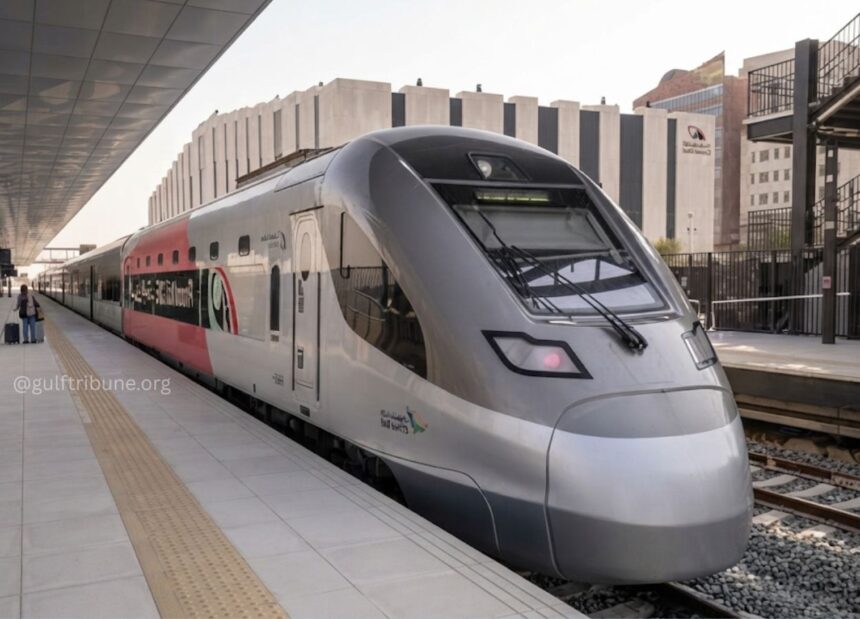
Commuters in the United Arab Emirates witnessed a historic event as Etihad Rail launched its first-ever passenger rail service connecting Dubai and Abu Dhabi on September 30, 2026. The first passenger train left the Al Yalayis station in Dubai early in the morning and took passengers all the way to the city of Mohamed Bin Zayed in Abu Dhabi in less than an hour. UAE Passenger Rail Link
This is one of the most significant developments in the mode of transport in the nation. By deploying high-speed trains capable of operating at speeds up to 200 km/h, transit authorities aim to significantly alleviate heavy vehicular congestion along the Sheikh Zayed Road highway while advancing sustainable mobility goals outlined in the national infrastructure strategy.
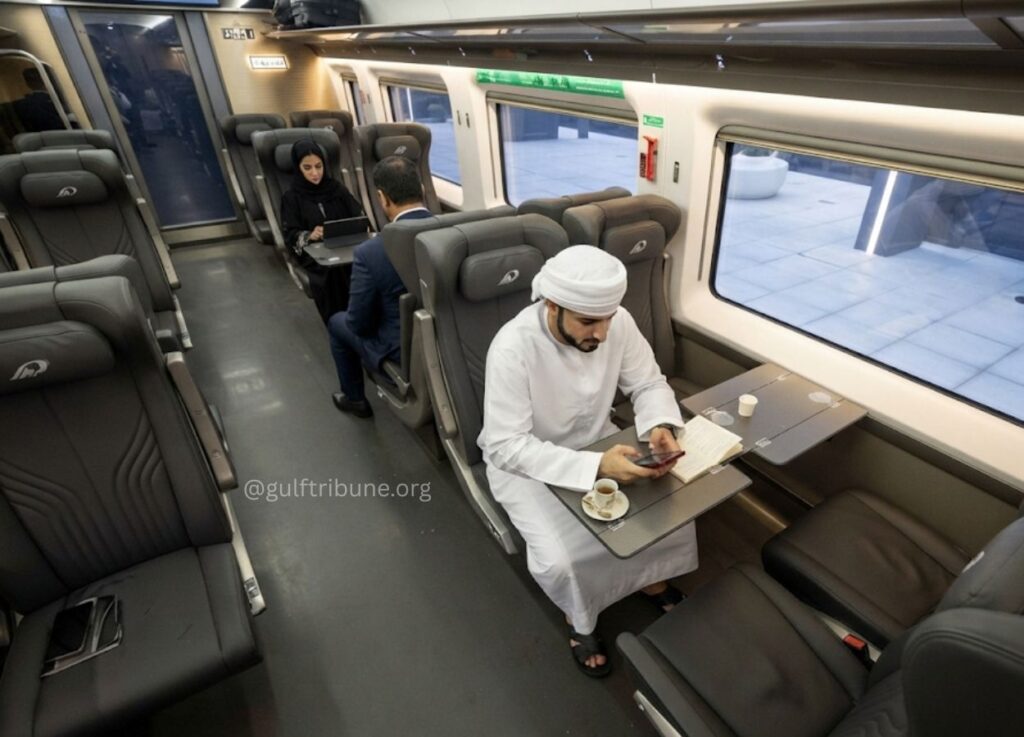
Commuters arriving at Al Yalayis Station were greeted with live musical performances, traditional cultural displays, and streamlined ticket validation counters during the launch event. Travelers processed their digital tickets through automated entry gates to board modern train sets equipped with overhead luggage storage, complimentary high-speed Wi-Fi, and individual electronic device charging points. Integrated transport arrangements allow passengers arriving from Abu Dhabi to transfer seamlessly to the Dubai Metro system using unified payment systems via an adjacent pedestrian bridge.
The commercial inauguration follows comprehensive trials across the national track network, which reached completion months ahead of schedule. Fares for the 57-minute intercity trip start at AED 39 for standard Comfort Class seating, alongside upgraded cabin tiers designed for business travelers seeking flexible scheduling and enhanced onboard amenities.
Initial train schedules have been structured to accommodate peak morning and evening commuting hours, catering to thousands of professionals who travel daily between the two emirates. The long-awaited passenger launch integrates Dubai into a broader railway corridor that eventually aims to connect eleven major cities and population centers across all seven emirates, stretching from Ghuweifat on the Saudi border to Fujairah on the eastern coast.
Beyond immediate travel convenience, the project plays a pivotal role in the UAE’s broader economic vision for diversification and environmental sustainability. Transportation analysts estimate that shifting daily passenger traffic from private vehicles to electric-diesel hybrid trains will cut land transport carbon emissions significantly over the coming decade.
Local business leaders have welcomed the rail connection, predicting it will stimulate cross-emirate commerce, boost domestic tourism, and enhance labor market mobility by enabling residents to live and work in different cities without enduring arduous highway commutes. With commercial freight services already fully operational across the country, the addition of passenger transport brings the nation’s multi-billion-dollar infrastructure masterpiece closer to full realization, positioning the United Arab Emirates as a global benchmark for modern, integrated transportation design. Gulf Tribune