


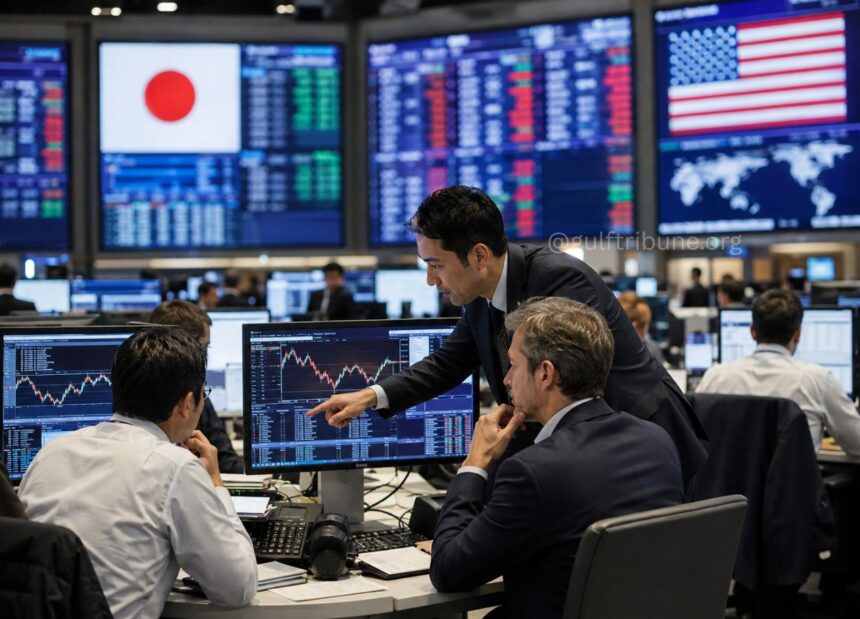
For more than a decade, the US and Japan have carried out a first coordinated intervention in the foreign exchange market. Both states are stepping up to support Yen because it has been declining in financial stability and inflationary pressures.
The joint action was officially announced in both states. It represents the first collaboration since 2011 when major economies intervened following Japan’s devastating earthquake and tsunami. This time the move was prompted because decades ago the Japanese yen weakened as compared to the US dollar; it increased the cost of imports for Japan and added pressure on households and businesses.
Japanese authorities said the intervention was aimed at reducing excessive volatility in currency markets rather than targeting a specific exchange rate. The US Treasury backed the effort, underscoring close economic coordination between Washington and Tokyo as both governments seek to maintain orderly financial markets. Officials also indicated that further measures remain possible if exchange-rate fluctuations become disruptive.

Following the announcement, the yen strengthened noticeably against the dollar, reversing part of its recent losses. Investors interpreted the coordinated move as a signal that both governments are prepared to act together to curb rapid currency swings.
The yen’s prolonged weakness has been driven by a wide interest-rate gap between Japan and the United States, encouraging investors to shift funds into higher-yielding dollar assets. At the same time, higher global energy prices have increased Japan’s import bill, worsening inflation in an economy heavily dependent on imported fuel.
Market analysts said the intervention could provide short-term support for the Japanese currency, although its longer-term effectiveness will depend on monetary policy and broader economic conditions. Expectations are also growing that the Bank of Japan could continue adjusting its policy stance if inflation and market conditions warrant additional action.
Currency interventions involving both Washington and Tokyo are rare and typically reserved for periods of exceptional market stress. The renewed cooperation reflects growing concern that prolonged exchange-rate volatility could affect global financial markets, trade flows, and investor confidence beyond Japan.