

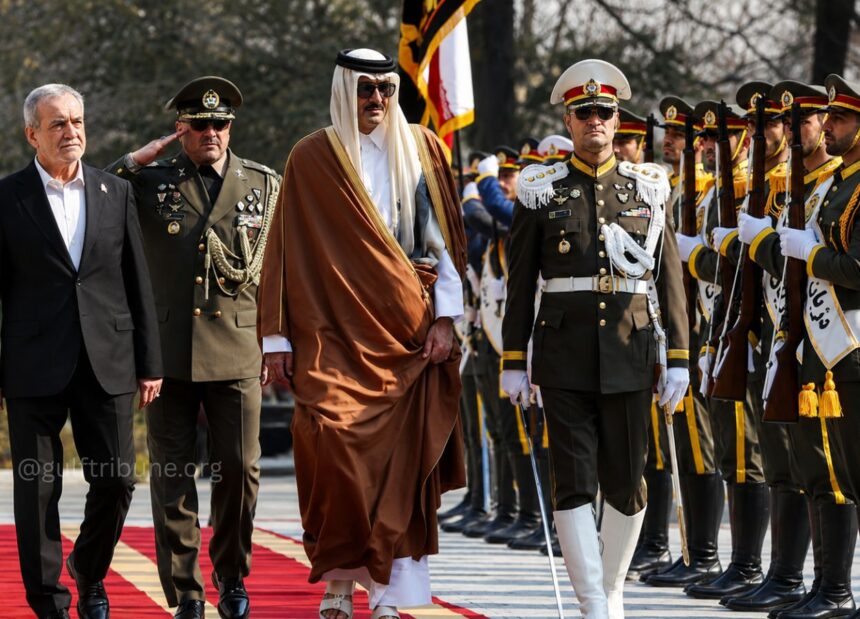
The Qatar Prime Minister, Sheikh Mohammed bin Abdulrahman bin Jassim Al Thaani, and the Foreign Affairs Minister have reached Tehran on Thursday to hold a high-level talk with the Iranian leadership aimed at de-escalating regional hostilities and restoring maritime stability.
The mediation initiative comes as US President Donald Trump signalled that Washington is operating under no strict timeline to formalise a negotiated settlement with Tehran. Speaking on the status of ongoing hostilities, Trump stated that economic measures and military options remain equally viable tools, emphasising that the United States is “not in a hurry” regarding direct negotiations.
The White House subsequently clarified that no formal direct talks between Washington and Tehran are currently scheduled, despite mediation attempts carried out by regional partners.
Doha’s diplomatic intervention forms part of a broader regional push involving Omani and Pakistani officials seeking to establish a viable platform for conflict resolution. Central to the discussions in Tehran is the partial restoration of commercial navigation through the Strait of Hormuz. Iranian officials confirmed that while preliminary discussions regarding temporary transit routes have progressed, full maritime access remains restricted. Iran’s Deputy Foreign Minister for Legal and International Affairs, Kazem Gharibabadi, stressed that reopening the vital waterway requires Washington to return to compliance under a previously negotiated June memorandum of understanding.
The intensified diplomatic activity coincides with ongoing maritime security challenges, including a recent merchant vessel fire caused by a projectile strike near the Strait, alongside fluctuations in global oil benchmarks as markets gauge the likelihood of a diplomatic breakthrough. Qatari officials reiterated that establishing direct dialogue and securing maritime traffic before pre-conflict levels remain essential priorities for long-term Gulf stability.
The diplomatic push underscores the delicate balance between active regional mediation and persistent strategic deadlocks. While Qatari intervention offers a viable channel for de-escalation and maritime coordination, Washington’s measured stance signals that comprehensive bilateral negotiations remain contingent on sustained regional consensus and explicit compliance with key maritime agreements.