


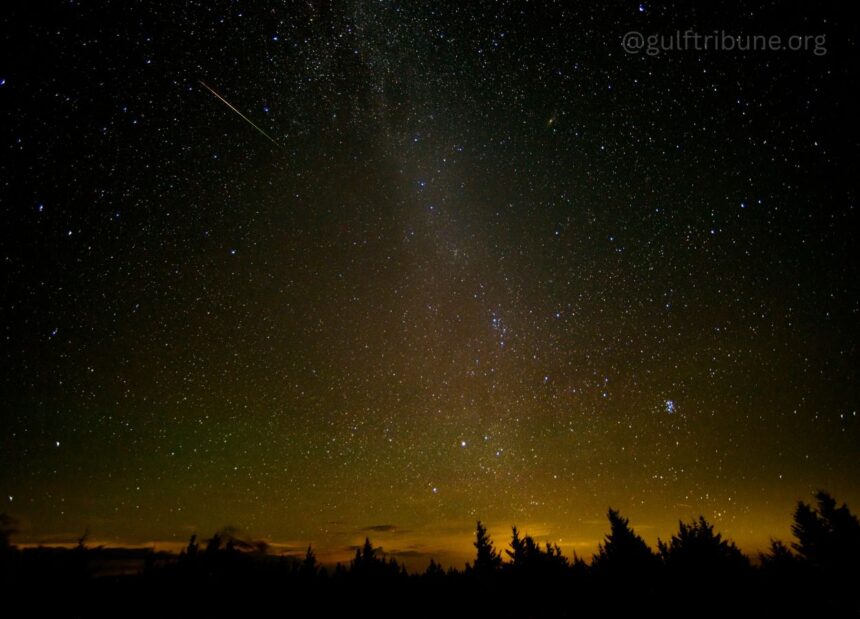
Hundreds of stargazers, nature enthusiasts, and families from the locality witnessed the annual natural phenomenon of the Perseids meteor shower, peaking at the desert of Sharjah as scores of shooting stars could be seen within an hour against the dark skies of Mleiha National Park.
Since the event took place in the UNESCO World Heritage site, the perfect conditions prevailed for witnessing the phenomenon. The phenomenon takes place yearly when our planet Earth moves through the orbital path containing dense dust and ice trails left by the Comet 109P/Swift-Tuttle in August. As ideal astronomical conditions combined with the lack of moonlight due to the new moon this year, the viewers could see bright streams of light and intense celestial fireballs moving in the night sky at speeds up to 59 kilometres per second.
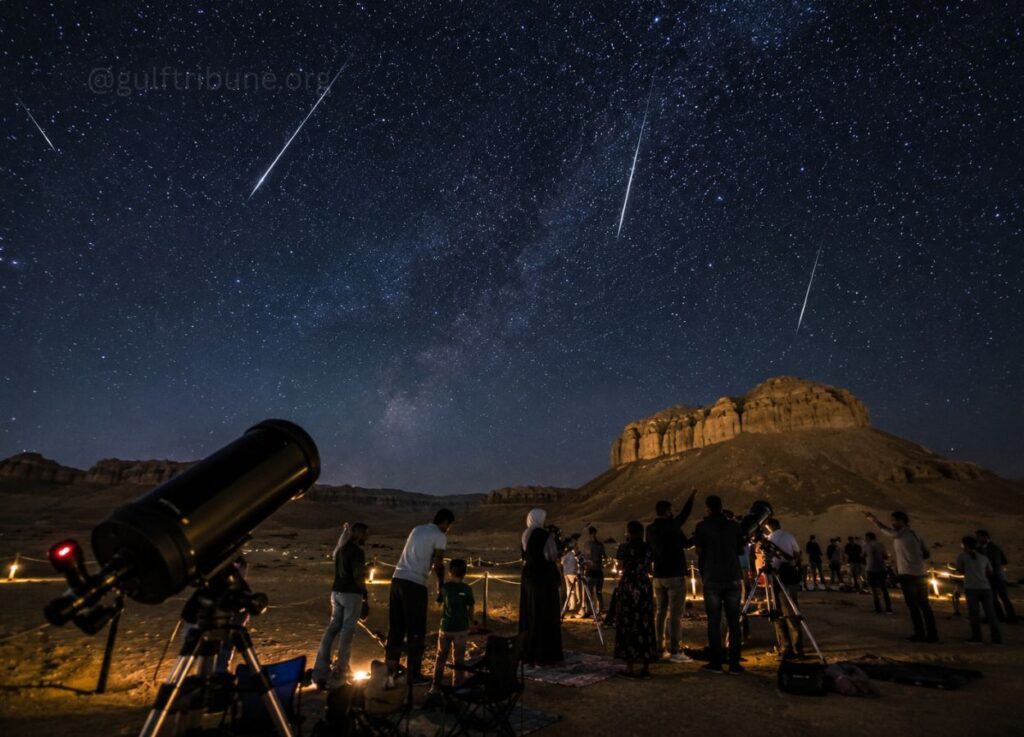
At Mleiha National Park, event organisers paired naked-eye meteor observations with interactive astronomy workshops and high-powered computerised Cassegrain telescopes ranging from nine to eleven inches. Guided by astronomy experts, attendees examined deep-space phenomena, observing bright stars like Vega, the famous binary star system Albireo, and distant planetary bodies, including Saturn and its surrounding moons, alongside the frequent meteor activity flashing across the northeastern horizon.
Affinities for space exploration drew large, active crowds deep into the desert sands despite typical mid-summer night temperatures, reflecting growing public engagement in regional astronomical developments. Science guides highlighted that while casual night-sky observers can spot isolated meteors on any given evening, peak Perseids activity routinely yields up to 100 visible shooting stars per hour under pristine dark-sky conditions.
The annual Perseids shower remains one of the most anticipated celestial events in the Middle East, with viewing experiences taking place across designated dark-sky sanctuaries in the United Arab Emirates, including Abu Dhabi’s Al Quaa region and Dubai’s Al Qudra desert reserves. The overall success of the Sharjah gathering highlights the country’s expanding public interest in practical astronomy, science education, and eco-tourism initiatives that actively encourage residents and visitors to disconnect from screen electronics and reconnect with the universe.